 PARTNERS
What Is Included
What the scope actually covers
No vague line items. This is what gets done, and what we will put in writing.
Strip and refinish
Old finish chemically stripped back to the substrate, floor neutralised, then four to six coats of commercial finish laid down. This is the reset when a floor has gone too far to recover.
Scrub and recoat
The maintenance version: top layers scrubbed off and one or two fresh coats applied. Far cheaper than stripping and, done on schedule, means you rarely need to strip at all.
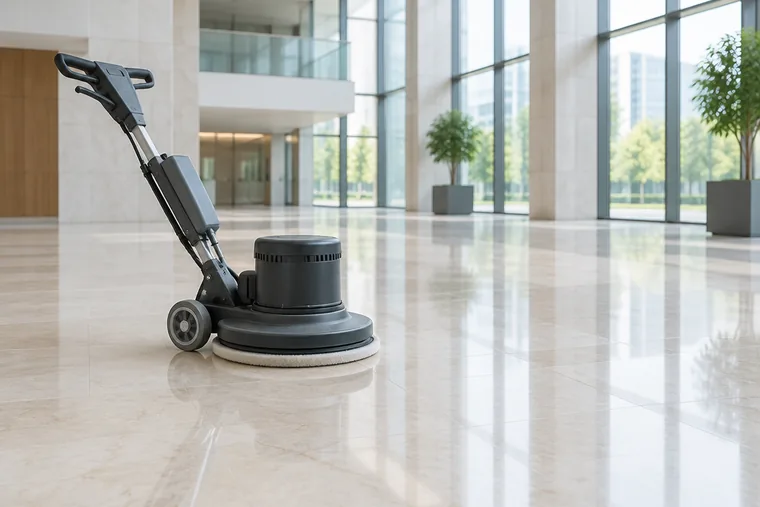
Burnishing and polishing
High-speed buffing that brings gloss back between recoats and hardens the finish so it wears longer.
Carpet extraction
Hot-water extraction that pulls soil out rather than pushing it around. Pre-spray and agitation on traffic lanes, spot treatment on stains, with dry times planned around your hours.
Tile and grout
Grout lines scrubbed and, where it makes sense, sealed. The difference between a floor that looks clean and one that actually is.
Concrete and sealed surfaces
Auto-scrubbing for warehouse, industrial and polished concrete, including edges and corners a ride-on machine cannot reach.
Entry matting strategy
The cheapest floor care there is. We will tell you where your matting is too short, which is the usual reason finish dies early.
How Often
Getting the frequency right
Burnishing monthly to quarterly depending on traffic. Scrub and recoat two to four times a year. Full strip and refinish ideally no more than every two or three years, because if you are stripping annually something upstream is wrong, usually matting or a missed recoat cycle. Carpet extraction twice a year in offices, quarterly in hospitality.
Pricing
What drives the price
Anyone quoting before seeing the space is guessing. These are the things that actually move the number.
- Total square footage and floor type
- Current condition, since a neglected floor costs more on the first visit
- How much furniture has to be moved and replaced
- Dry time you can tolerate, which affects crew size
- In salt and grit climates, how aggressive the winter has been
Who It Is For
Businesses we do this for most
FAQ
Questions we get asked
Straight answers, including when the answer is that you do not need this.
How long before we can walk on it?
Can you save a floor that looks beyond help?
Why did our last contractor's finish fail so fast?
Related
Other services
Most clients combine two or three of these under one contract and one invoice.
Get a Quote
Written scope, flat price, inside 24 hours
Tell us the square footage and your hours and we will come back with exactly what this costs.